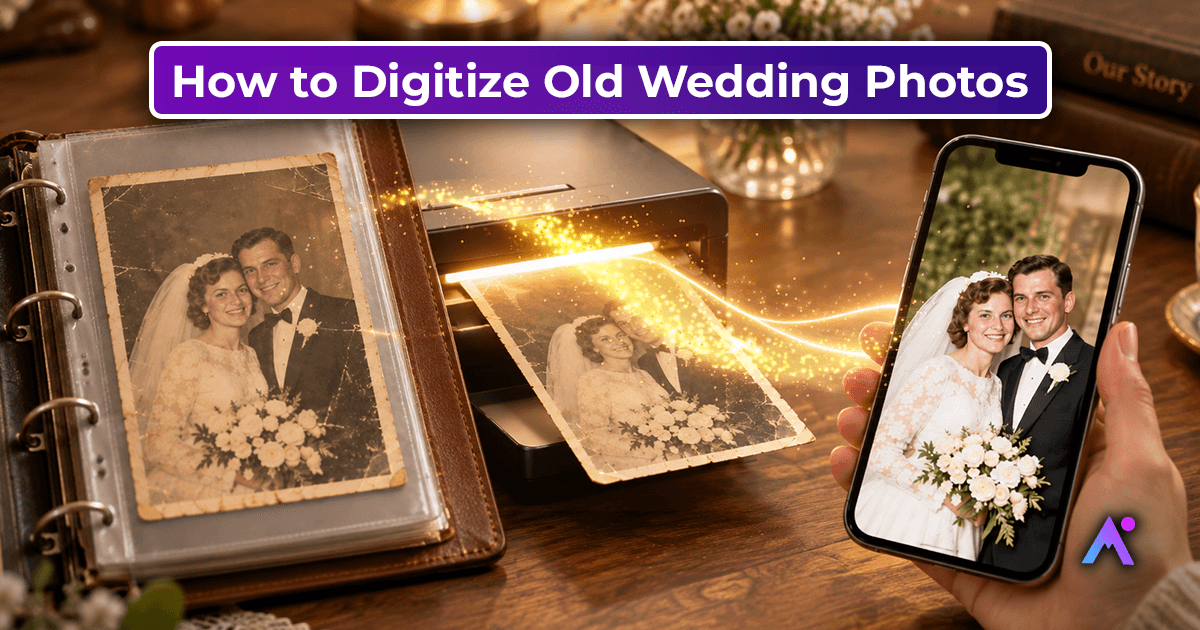
How to Scan & Digitize Tintypes and Glass Negatives
AM
Animate Memories Team·
#Scanning tips#Tintypes#Glass plates#Digitization#Tutorial

Preserving 19th-Century Photographic Relics
Before the invention of modern flexible film, photographs were created directly onto metal (tintypes) or glass plates (ambrotypes and collodion wet plates). Digitize these fragile artifacts requires specialized care.
Handling Precautions
- Always wear powder-free nitrile or cotton gloves to prevent skin oils from etching silver salts.
- Never clean glass plates or tintypes with chemical cleaners or water. Use a soft camel-hair blower brush to remove surface dust.
Scanner Settings for Metal & Glass
Flatbed scanners with transparency adapters yield the best results for glass plates. For metal tintypes, use a flatbed with reflection mode set to 1200 DPI 24-bit RGB, even for black-and-white plates, to capture subtle tonal variations in the metal emulsion.
AI Restoration & Animation
Once digitized, upload the high-resolution TIFF or PNG to Animate Memories. Our metal-glare compensation filter removes scanner hot spots, preparing the portrait for crystal-clear animation.
Tagged under
#Scanning tips#Tintypes#Glass plates#Digitization#Tutorial