Photo Restoration: Bring Old and Damaged Photos Back to Life
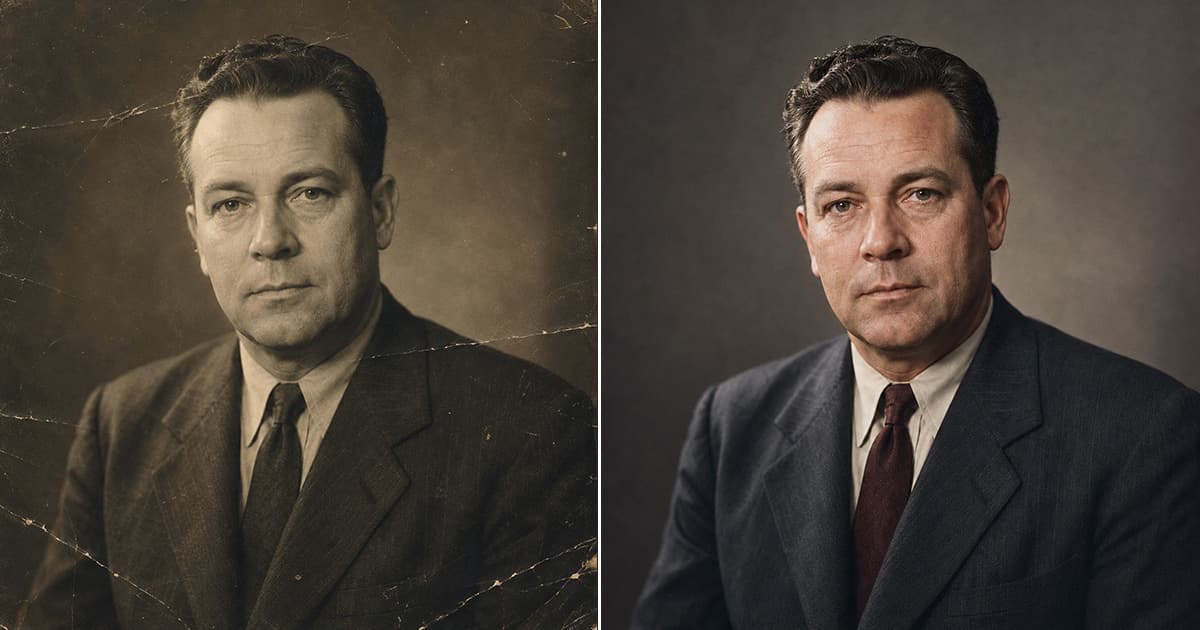
Photo Restoration: Bring Your Old Memories Back to Life
Photographs are more than pictures. They document people, places, parties and events that may never be repeated. Unfortunately, physical photos can degrade over time. Scratches, dust, fading, stains, tears, blur and low image quality can make it hard to enjoy precious memories.
This is where photo restoration comes into play.
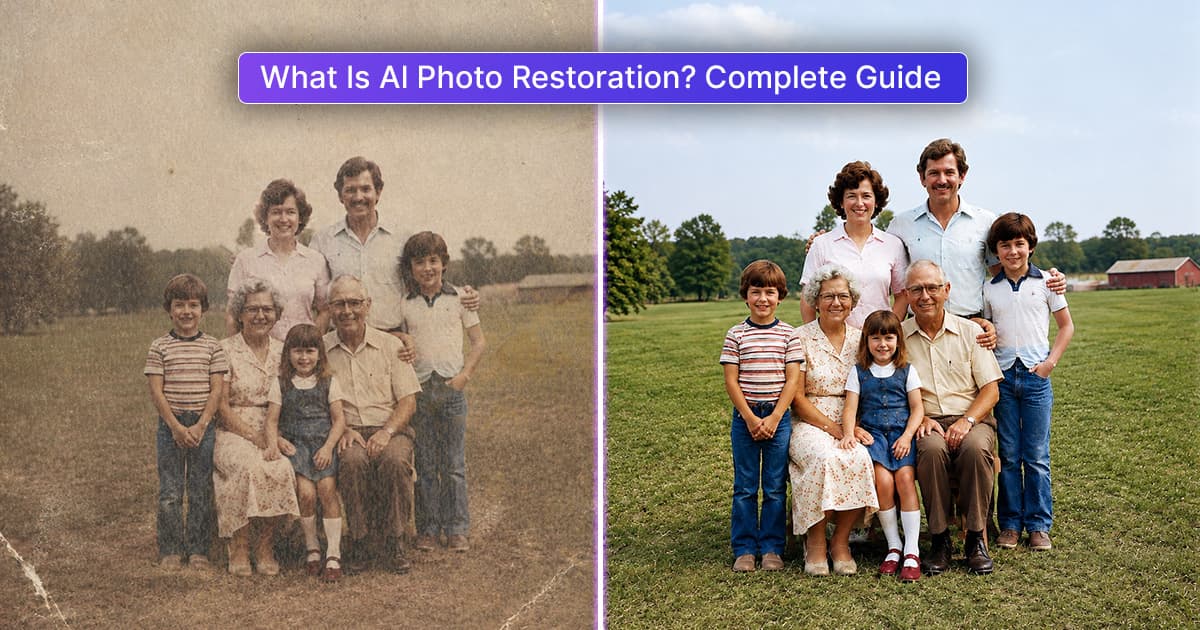
Photo Restoration is the process of restoring an old, damaged, faded or low quality photograph and making it look clearer and more visually appealing. Today’s AI tools make the process faster and easier than the old way of editing photos. Instead of spending hours doing it all by hand, users can upload an old photo and use artificial intelligence to automatically identify and improve many common problems.
What is Image Restoration?
Photo restoration is a digital process of repairing and improving old, damaged photographs. Restoration may involve removing scratches, improving sharpness, correcting fading, reducing noise, enhancing contrast and restoring missing visual details, depending on the condition of an image.
Traditional restoration usually requires professional editing software and considerable technical skill. AI photo restoration employs machine learning algorithms to analyze the image and make automatic improvements.
The AI restoration tool can recognize patterns such as faces, backgrounds, clothing and other objects. It then uses these patterns to improve the overall look of the photograph.
The result is usually a cleaner, sharper and more detailed version of the original image, while trying to maintain the original character of the image.
Why Old Photos Need Restoring?
Old photographs tend to deteriorate in quality over time. Physical storage conditions can have a huge impact on their appearance.
Common problems are:
Colors faded
Scratches & Marks
Dust spots
Fields of tears
soft faces
Low resolution
Noise in the image .
Color change
Folds and wrinkles
Low contrast
Lacking details
Lighting uneven
Photos stored in humid areas or in the sunlight may deteriorate more quickly. Even photos that are carefully stored in albums can develop scratches, stains or fading after decades.
Digital restoration gives us a chance to preserve these images before they are further damaged.
How Does AI Photo Restoration Work
AI photo restoration is a combination of image processing and machine learning technology. Each tool will have its own exact process , but the general workflow is quite simple .
1. Upload the Old Photograph:
The process typically begins with uploading a digital copy of the photo. You can make a digital version by scanning a physical photo or by using a high quality camera.
For best results use the clearest version available of the original photograph.
2. AI Scans Image
The restoration system analyzes different areas of the picture. It may identify faces, backgrounds, objects, scratches, noise and areas of missing detail.
The more advanced AI models can detect common photographic patterns and guess what some parts might have originally looked like.
3. Reduced Damage and Noise
Artificial intelligence can try to get rid of visual imperfections such as scratches, dust, grain and digital noise. This can make the image look cleaner without any manual editing.
4. Enhancement Makes More Detail Visible
Photos taken in the past are often out of focus or low resolution. AI enhancement can sharpen the image and make facial details and environmental elements more visible.
It should be noted that the technology of AI enhancement will never bring back information that wasn't initially captured. It just makes the picture look more detailed using certain patterns.
5. The Final Picture Is Exported
After restoration, the enhanced picture can be saved digitally. This means you can store the improved image on your computer, phone, cloud storage, or any other digital device.
Making several copies is an efficient way to ensure you'll preserve the valuable family photographs for a long time.
Benefits of Photo Restoration
There are lots of reasons why people use photo restoration services.
Family Memories Preservation
The old family photos can be the only visual memory about previous generations. With restoration, these memories can become more accessible for children, grandchildren, and future generations.
Improvement of Image Quality
Restoration can help make the images clearer, brighter, and sharper, especially in case when the old photograph became blurred.
Damage Fixing
These include scratches, dust, stains, and other issues. Restoration can help in minimizing the impact of many of these problems.
Digitizing Significant Photographs
Restoration of the physical photographs and digitization can act as a form of added protection. In case the original copy is damaged or destroyed, there could be another copy of the photograph.
Creating Meaningful Presents
The restoration of the family photograph becomes useful for creating presents. The photograph can be used for printing, photo book, anniversary gift, birthday gift, and family albums.
Photo Restoration vs. Photo Enhancement
Both the terms, photo restoration and photo enhancement are connected, but not identical.
Photo restoration involves mainly the correction or recovery of the appearance of the old and damaged photograph. The problems may include scratches, fading, stains, tears, and others.
Photo enhancement includes improving of the quality of the image through increased sharpness, resolution, brightness, contrast, and other parameters.
For example, 50-year-old family photograph with scratches and fading colors will have to undergo restoration in the first place, and after this step can be enhanced.
There are a number of modern AI-based software which combines both.
Can AI Restore Old Photographs?
AI technology can prove helpful with very old photographs, provided that there are still visible elements in the image.
For instance, an old photo might have faded colors and some scratches but have the face visible enough. Then AI technology will be able to restore all the details of the photo.
Nonetheless, there may be issues with restoring photographs with significant damage. In case a lot of the image details are absent, then AI technology has to invent certain parts of the image. Thus, it can hardly provide one with exact information.
In case of a historically valuable or unique photograph, it is better to keep the original image and try out different restoration techniques.
Must Read this Blog : What Is AI Photo Animation?
How to Achieve Better Photo Restoration Result
The state of the original digital picture can have a great effect on the resulting photo.
Scanning the Picture with Adequate Resolution
If the picture is not digital, scan it in appropriate resolution. Try to avoid a heavily compressed screenshot or a poor-quality picture whenever possible.
Careful Cleaning of the Original Picture
If the scanned picture is a printed photo, clean the scanner and the photo from dust without damaging the old picture.
Using the Best Quality Original
Try to use the sharpest and least damaged original picture if there are several copies of the same photo.
Over-Restoration
Try not to restore the picture in such a way that it will lose the unique look of the original picture. Do not try to sharpen too much or change faces artificially.
Keeping the Original Picture
Do not forget to keep the original scan file for further use.
Who Can Take Advantage of Photo Restoration?
There are many people who can take advantage of photo restoration.
For one, families can restore photos of their parents, grandparents, and ancestors.
For another, photographers can restore archival photos for creating digital collections out of them.
In addition, researchers and historians may use restoration to make historical photos more readable and attractive.
Moreover, collectors can enhance photos while keeping their originals unaltered on digital copies.
Furthermore, companies and creative individuals can restore photos for various purposes, including presentations, websites, and promotions.
Creative Ways to Use Restored Photos
After restoring an old photograph, you can apply it in many creative ways.
You can make:
Photo albums
Collections of digital photos
Customized gifts
Remembrances
Photo books
Historical archives
Social media posts
Slide shows
Comparisons before and after restoration
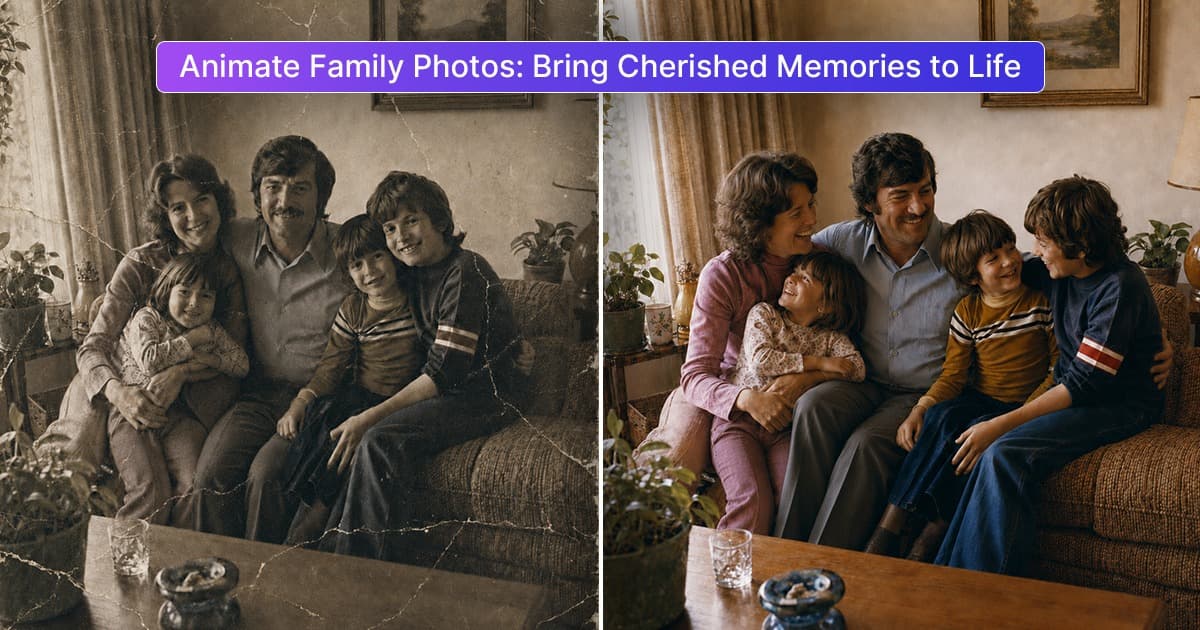
You can also use AI to apply additional modifications to a restored photo. For instance, an old photo can be colored, animated, or converted into a video.
Restoration of Photographs and the History of Your Family
The best use of photo restoration in the real world is the preservation of your family history.
There are many families who have many pictures but cannot be sure about the exact date or place of the photograph.
Digitization and restoration of these photographs can help in organizing them easily.
You can create a folder that consists of your family members, decades, events, or places. Including names and date in the files can also be helpful in understanding the stories behind the photographs.
Restored photograph gains more value when there is a story that is attached with the photograph.
Is It Safe for Your Memories to Restore Photos with the Help of AI?
While using an online restoration service, you need to keep in mind how your photographs will be stored. Your personal photograph might contain some of your sensitive family information. So always check out the privacy policy and storage policy of the platform.
In case of very sensitive photographs, you should also think twice before sending them to the restoration services.
It is always better to keep a backup of the photograph yourself.
Photo Restoration in the Future
AI will continue to revolutionize the way people work with their old photographs. The restoration process becomes more available for use by non-professional editors that do not have any special training in this matter.
In the future, there is a possibility of working with even more complicated damages, enhancing the facial features naturally, and making high-quality restoration from very small resolution photographs.
With AI, the process of combining restoration with colorization, image enhancement, and photo animation will become much simpler. This means that an old picture could be transformed into a dynamic memory of the digital age.
Conclusion
Photo restoration gives an opportunity to preserve and revive the precious memories. If an old photograph looks old and faded, blurred, or is too complicated to see properly, this problem can easily be fixed by using modern technologies of photo restoration.