Finding Grandfather: An Animated WWII Snapshot Story
Some family photographs preserve more than a face. They hold a connection to someone whose life began long before the next generation arrived.
For families with a military history, an old photograph of a grandfather in uniform can be especially meaningful. It may be one of the few surviving glimpses of a relative who served during wartime, experienced life far from home, and returned to a world that younger family members can only imagine.
But what happens when that photograph is faded, damaged, or so small that its details are difficult to recognize?
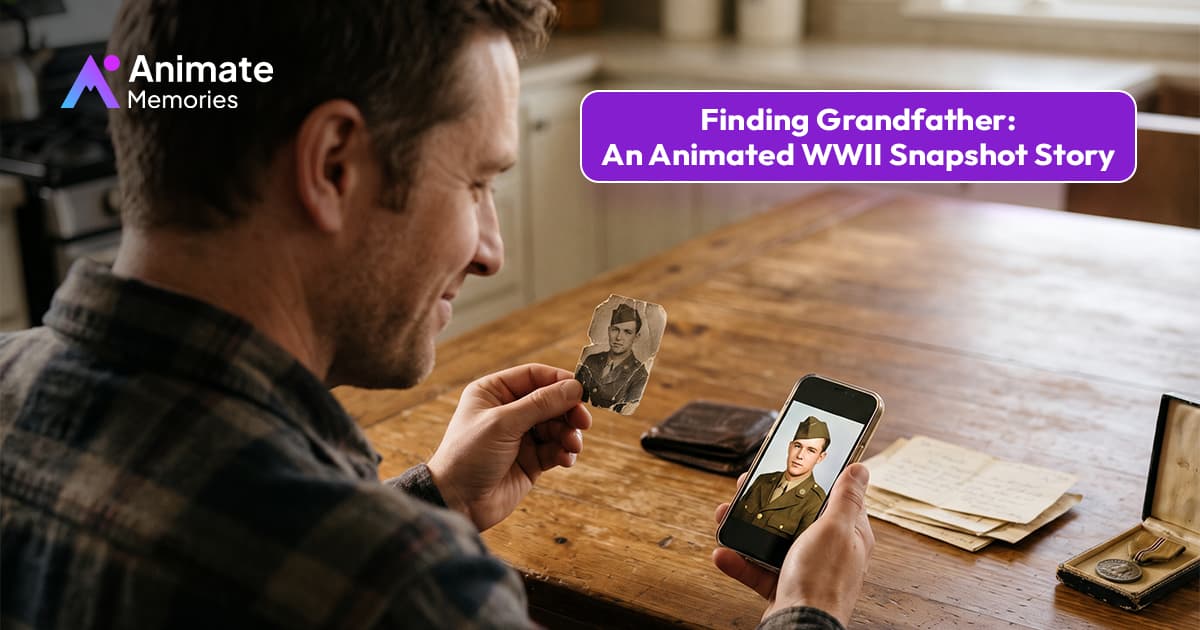
For Mark Reynolds, a battered photograph of his grandfather, Corporal David Reynolds, became an unexpected way to connect with a family member he had never met. David had served in the Pacific theater during 1944 and passed away long before Mark was born. The small photograph Mark knew showed a serious young man in uniform, with years of wear obscuring parts of the image.
With digital restoration and AI photo animation, a static portrait can become easier to see and experience in a new way. The technology cannot recreate the past exactly, but it can offer families a fresh opportunity to explore the photographs and stories they have inherited.
Mark and David Reynolds are an illustrative example, based on the kinds of photographs families bring to Animate Memories. With Veterans Day on Wednesday, November 11, it is a good moment to look again at the service photos in your own family.
A Faded Photograph in a Leather Wallet
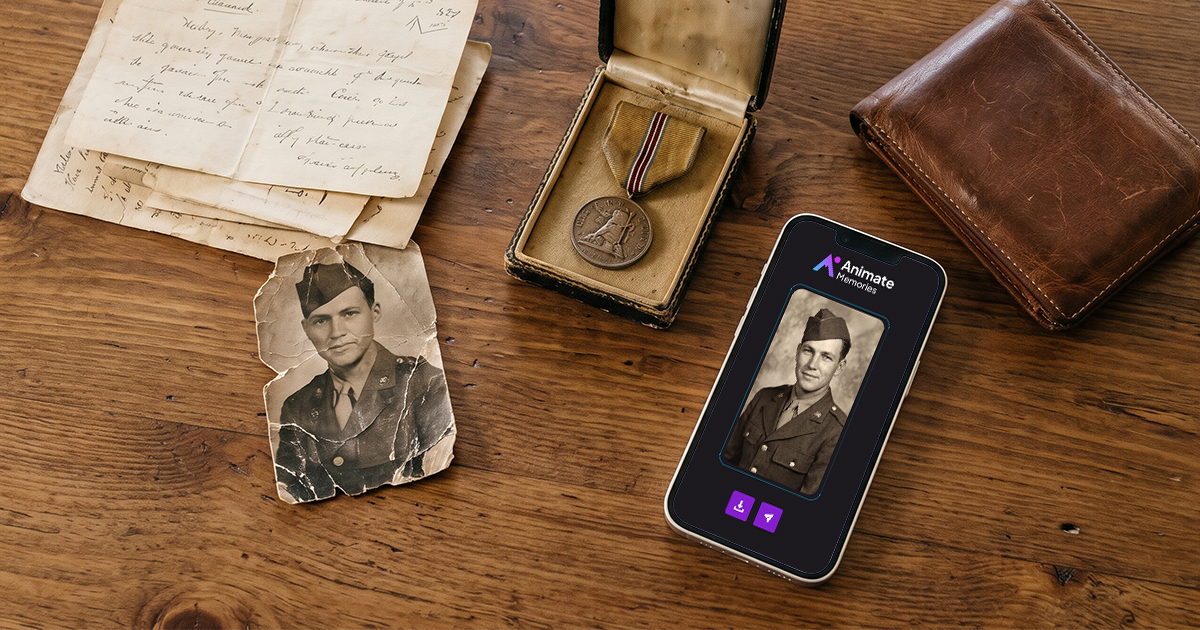
The photograph Mark had of his grandfather was tiny, measuring approximately 2 by 3 inches. It had spent decades exposed to the friction and pressure of being carried in a wallet.
The edges had worn away, and fine cracks crossed parts of David's cap and eyes. The damage made an already small portrait harder to appreciate.
For Mark, the photograph was more than an old image. It was one of the few visual connections he had to a grandfather whose life he had never personally experienced.
Many families have similar keepsakes. A photograph might be tucked inside a wallet, kept in a military record book, stored in a box of letters, or passed down with medals and other personal belongings.
Over time, these objects can become fragile. Paper may fade, surfaces may develop scratches, and small prints may lose details through repeated handling.
Yet even a damaged photograph can preserve something important: the face of a person whose story deserves to be remembered.
The first step is to protect the original and create a digital copy that can be examined without repeatedly handling the fragile print.
Why Military Photographs Matter to Family History
Military photographs provide a personal perspective on history. Uniforms, insignia, locations, and handwritten notes may offer clues about a relative's service and the period in which the photograph was taken.
For younger family members, these images can make historical events feel less distant. Instead of thinking only about dates, battles, and military units, they can begin to understand that each photograph represents an individual with relationships, responsibilities, and a life beyond the uniform.
A portrait may lead to questions such as:
- Where was this photograph taken?
- What military unit did the person serve with?
- Who kept the photograph, and why?
- Are there letters, service documents, or other photographs that provide more context?
- What stories did family members pass down about this person?
Not every question will have an answer. That is part of the process of family history research.
When documenting a relative's military background, distinguish confirmed information from family recollections and unanswered questions. A photograph can help guide research, but its appearance alone cannot establish someone's identity, rank, location, or service history.
The Moment of Connection: Seeing a Familiar Face Differently
After discovering how much damage had affected David's photograph, Mark used Animate Memories to improve the digital image and animate the portrait.
The restoration process focused on reconstructing missing uniform details and reducing the heavy silvering that affected the photograph. When the animation was generated, David's serious expression appeared to relax into a gentle smile, with his eyes shifting toward the camera.
For Mark, this created an emotional connection to someone he had known only through family history and a small, damaged picture.
He described the experience as feeling welcomed into his grandfather's world across eight decades.
That response illustrates why AI photo animation can feel meaningful to families. A still portrait offers a fixed expression. An animated version introduces generated movement, allowing viewers to experience the image in a new way.
It is important, however, to understand what the result represents. The smile and eye movement are AI-generated interpretations, not recovered footage of David or proof of how he looked and moved in that exact moment.
The original photograph remains the historical record. The animation provides a creative way to engage with it.
How AI Photo Restoration Helps Preserve Old Military Portraits
Before animating a historical photograph, it can be helpful to improve its digital quality.
Old military portraits may have scratches, fading, creases, stains, or damaged edges. These imperfections can obscure facial features and make the uniform or background harder to see.
AI photo restoration can help reduce some visible damage and improve the appearance of a digital copy.
Step 1: Protect the Original Photograph
Handle the print by its edges and avoid rubbing the image surface. Do not use household cleaners, tape, or glue on a fragile historical photograph.
If the image is flaking, stuck to another surface, or particularly valuable, seek advice from a photograph conservator before attempting physical treatment.
Step 2: Create a High-Quality Digital Copy
Scan at 600 DPI or higher. For a wallet-size print like David's, scan at 1200 DPI so fine details such as insignia survive.
If scanning is not suitable for the original, photograph it under soft, even lighting. Keep the camera straight and avoid reflections and shadows.
Save an untouched copy before making any changes.
Step 3: Restore Visible Damage
Use a photo restoration workflow to improve the digital image. Depending on the source photograph and the tool, this may help reduce scratches, improve contrast, or make certain details clearer.
Review the face and uniform carefully. AI may generate plausible details in areas where the original information is missing, so avoid treating every restored feature as historically accurate.
For more detailed instructions, read our guide to AI photo restoration.
Step 4: Compare the Restored Image with the Original
Check whether facial features, clothing details, and other important elements remain consistent with the source photograph.
Keep both versions. The restored image can be easier to view, while the untouched scan preserves a record of the photograph before digital editing.
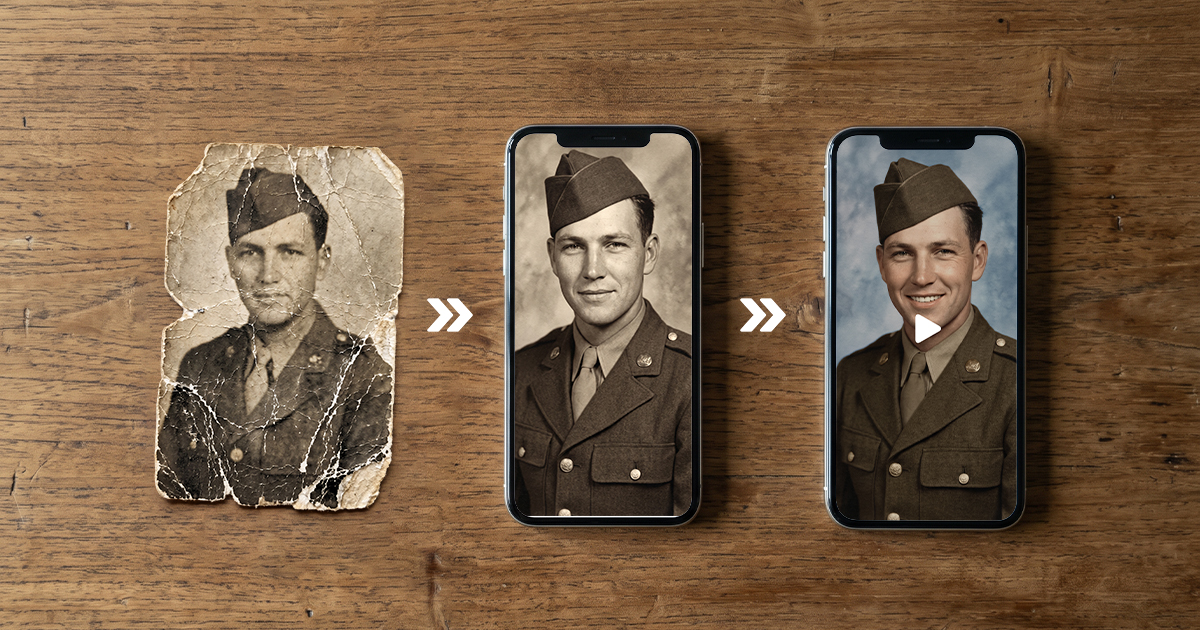
How to Animate Old Military Photos with AI
Once a photograph has been digitized and prepared, AI photo animation can turn the still image into a short video.
Step 1: Choose a Suitable Portrait
A photograph with a visible face and reasonably clear features works best. A small portrait may still work, but heavy damage or very low resolution can affect the result.
Step 2: Upload the Digital Image
Open the Studio, choose Animate, and upload the restored scan. Pick a subtle template or describe the movement you want, such as a soft smile and a slow blink. The credit cost shows before you generate; a 5-second 720p video uses 4 credits.
Step 3: Generate a Subtle Animation
For a historical military portrait, subtle movement may be more appropriate than exaggerated expressions. Gentle eye movement or a small change in expression can preserve the overall character of the image.
Step 4: Review the Result Carefully
Watch the animation and compare it with the original. Look for changes to the person's face, uniform, insignia, and background.
AI may produce details that look realistic but are not present in the historical record. If a detail matters to the person's military history, verify it independently rather than relying on the generated video.
Step 5: Preserve Both Versions
Save the original scan, restored image, and final animation together. Label the animated file clearly so future viewers understand that it is an AI-created interpretation of a historical photograph.
To learn more about the process, read our guide on how to animate an old photo.
Honoring Veterans Through Family Stories
Preserving a military photograph is about more than improving its appearance. It is also an opportunity to preserve the information and memories connected to the person pictured. Veterans Day, Wednesday, November 11, is a natural moment to share it: play the animated portrait at a family dinner, or post it with a short note about his service and a line saying the movement was created with AI.
If you have photographs of a parent, grandparent, or other relative who served in the military, consider creating a small family archive.
Include the original photograph, a digital scan, any restored version, and written information about the person. Add service dates, unit details, locations, or family stories when these can be supported by reliable sources.
Letters, diaries, service records, medals, and other photographs may provide valuable context. Record where each detail came from, especially when family members remember events differently.
You can also ask relatives to share their recollections in writing or through recorded interviews. Even a short conversation about who kept a photograph or when it was taken can add context that would otherwise be lost.
These details help future generations understand the person behind the uniform.
Sharing a Grandfather's Story with Younger Generations
Family history can sometimes feel distant to children and grandchildren who did not know the people being discussed.
Photographs provide a starting point for conversation. An old military portrait can prompt questions about the person's childhood, family, work, friendships, and experiences outside military service.
Rather than sharing an image without context, explain what is known about the person and invite younger relatives to explore the story.
You might create a digital album that includes photographs, short biographies, letters, and carefully labeled AI animations. This can make the archive easier to explore while keeping historical evidence separate from generated content. For a similar story, read The Letters and Portraits of 1944.
For more ideas, read our guide on how to revisit childhood memories and bring them back to life.
The aim is not to make every photograph move. It is to help family members understand why each image matters and how it fits into their shared history.
Preserving Historical Photographs for the Future
Even after a photograph has been restored or animated, preserving the source image remains essential.
Follow these simple practices:
- Store the original carefully: Keep prints in a stable environment, away from moisture, excessive heat, and direct sunlight.
- Create digital backups: Save the original scan and edited versions in at least two secure locations.
- Keep identifying information: Record names, dates, locations, and sources when known.
- Label AI-generated content: Make it clear when movement or visual details have been generated rather than recorded.
- Review historical details: Verify military information against reliable documents wherever possible.
- Share thoughtfully: Consider family preferences and privacy when publishing personal or sensitive images online.
A well-organized archive helps preserve both the photographs and the stories that give them meaning.
Frequently Asked Questions
Can AI animate old WWII photographs?
Yes. Animate Memories can turn a clear scan of a historical portrait into a short video with subtle facial movement. Results depend on the photograph's quality, visible facial features, and the tool used.
Can I restore a damaged military photograph before animating it?
Yes. Restoring a digital copy first may help improve visible scratches, fading, or contrast. Keep an untouched scan and review the restored details carefully, especially when historical accuracy matters.
Does an animated photograph show how my grandfather really moved?
No. AI generates plausible movement from a still image. It does not recover the person's actual movements or recreate an original video recording.
How can I identify a relative in an old military photograph?
Start with family records, names written on the photograph, service documents, letters, and other pictures. Military archives and reliable historical records may provide additional clues. Treat uncertain identifications as possibilities until they can be verified.
What should I do with fragile WWII photographs?
Handle them as little as possible, avoid household adhesives and cleaning products, and store them in suitable archival materials. For photographs that are flaking, stuck, or severely damaged, consult a qualified photograph conservator.
How can I preserve a veteran's story for future generations?
Keep photographs, written recollections, letters, and verified service information together in a digital or physical archive. Add names and dates where known, and record which details are confirmed and which come from family memories.
Honoring the Person Behind the Photograph
For Mark Reynolds, a small, damaged photograph offered a new way to connect with Corporal David Reynolds, a grandfather he had never met.
The restoration and animation did not bring back the past exactly as it happened. Instead, they created an opportunity to look more closely at a familiar face and reflect on the life behind it.
That is what makes historical family photographs so valuable. They preserve traces of real people, even when much of their personal history remains unknown.
By protecting original prints, restoring digital copies carefully, researching family records, and sharing stories across generations, families can keep these connections alive.
AI photo animation adds one more way to share that story, especially with younger relatives who never met him.
A small photograph may seem like a modest keepsake, but its meaning can grow across generations. Preserve the image, document the story, and give future family members the chance to discover the person behind the portrait.
Have a service photo in your family? Animate it in time for Veterans Day.