Reminiscence Therapy for Alzheimer's: How Family Photos Can Help
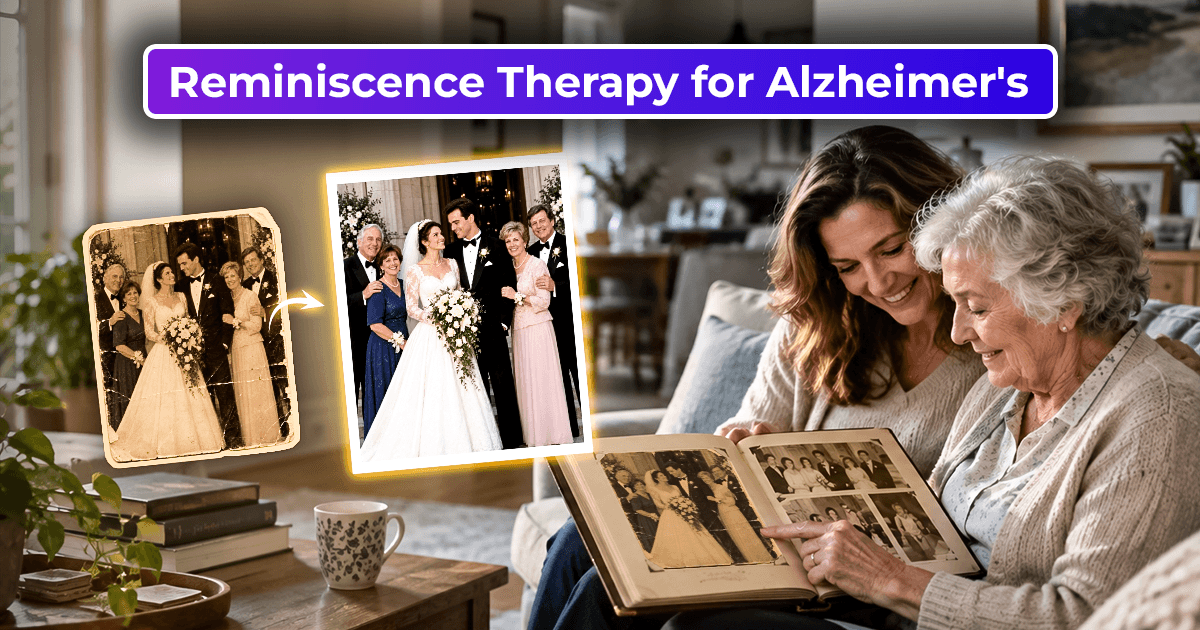
People living with Alzheimer’s may find it difficult to create new memories, while memories from the past can sometimes remain easier to recall. This is one reason reminiscence activities may use familiar objects, stories, music, and family photographs to encourage interaction and conversation about meaningful experiences.
Family photographs can be especially valuable during these activities. Looking at a familiar face, wedding picture, or old family moment can sometimes encourage a person to talk about people and experiences from their past.
While family photos cannot cure Alzheimer’s disease or restore lost memories, they can help create opportunities for conversation, emotional connection, engagement, and remembering meaningful moments with loved ones.
What Is Reminiscence Therapy for Alzheimer’s?
Reminiscence involves remembering and talking about experiences from the past. Reminiscence therapy is a more structured approach that may use photographs, music, stories, or familiar objects to guide these conversations. Structured reminiscence sessions may use photographs, music, familiar objects, stories, or other prompts to encourage discussion. Recollection therapy is applied to a patient with Alzheimer’s disease, which allows a person to be involved in an activity that does not put much pressure on remembering memories.
A goal of reminiscence activities is to create opportunities for conversation, connection, and engagement with meaningful experiences from the past. It should be a comfortable and enjoyable experience, not a test of how well they can remember.
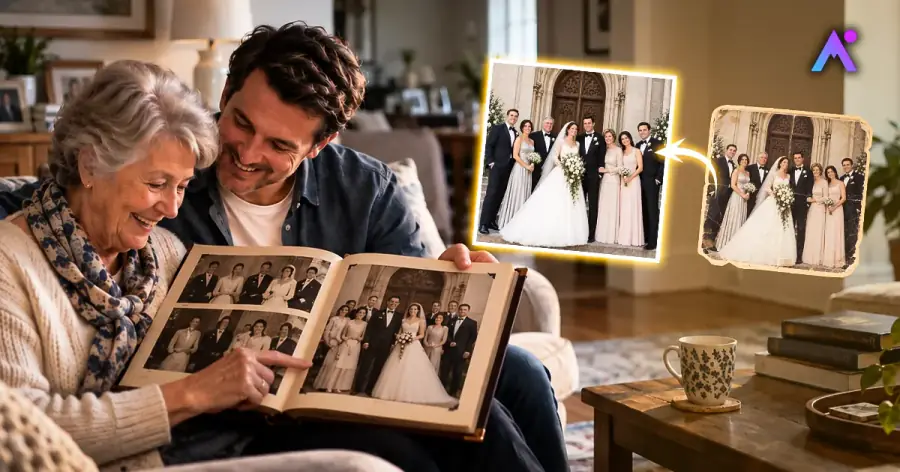
Using Family Photos to Encourage Reminiscence
Family photographs can act as gentle reminders of meaningful moments from the past. Looking through old pictures of loved ones, weddings, holidays, or family trips may bring back memories, emotions, or stories connected to those moments.
For example, an old wedding photograph might encourage someone living with Alzheimer’s to talk about how the couple first met, where the wedding took place, what they wore, who was there, or how the family celebrated. Even small details, such as the food served or the traditions followed during the wedding, can sometimes lead to a meaningful conversation and help family members reconnect with the past.
Photos Can Encourage Conversation
Start a Conversation Around the Photograph
One of the simplest ways to encourage reminiscence is to talk about a photograph together. Instead of asking direct questions like, “Do you remember who this is?”, try making the conversation feel natural and relaxed.
You could say, “Tell me about this picture. What stands out to you in this photo? /This looks like your wedding day.” This gives the person an opportunity to share whatever comes to mind without feeling like they are being tested. Even if they only remember a small detail, it can become the starting point for a meaningful conversation.
Photographs Can Help Maintain a Person’s Identity
Alzheimer’s disease can make it harder for a person to remember important parts of their personal history. Familiar Family photographs can provide familiar visual cues connected to people, relationships, milestones, and experiences that have shaped a person’s life.
Creating a collection of meaningful photographs can be a helpful way to keep these memories accessible. An album featuring important people and special moments can encourage conversations and help the person stay connected with their personal story.
How Can You Use Family Photos for Reminiscence?
Create a Photo Album for Reminiscence
A family photo album can bring together meaningful moments from different stages of a person's life. Ask family members to contribute photographs and arrange them in a simple, easy-to-follow order.
You could organize the album around themes such as:
- Childhood memories
- School days
- Young adulthood
- Meeting their partner or spouse
- Wedding day
- Family life
- Holidays and vacations
- Children and grandchildren
- Achievements and important milestones
Adding short notes beside the photographs can make the album even more meaningful. Include names, places, dates, or a brief description of what was happening in the picture. These details can provide additional context and give family members something to talk about.
Preserving Old Family Photos Digitally
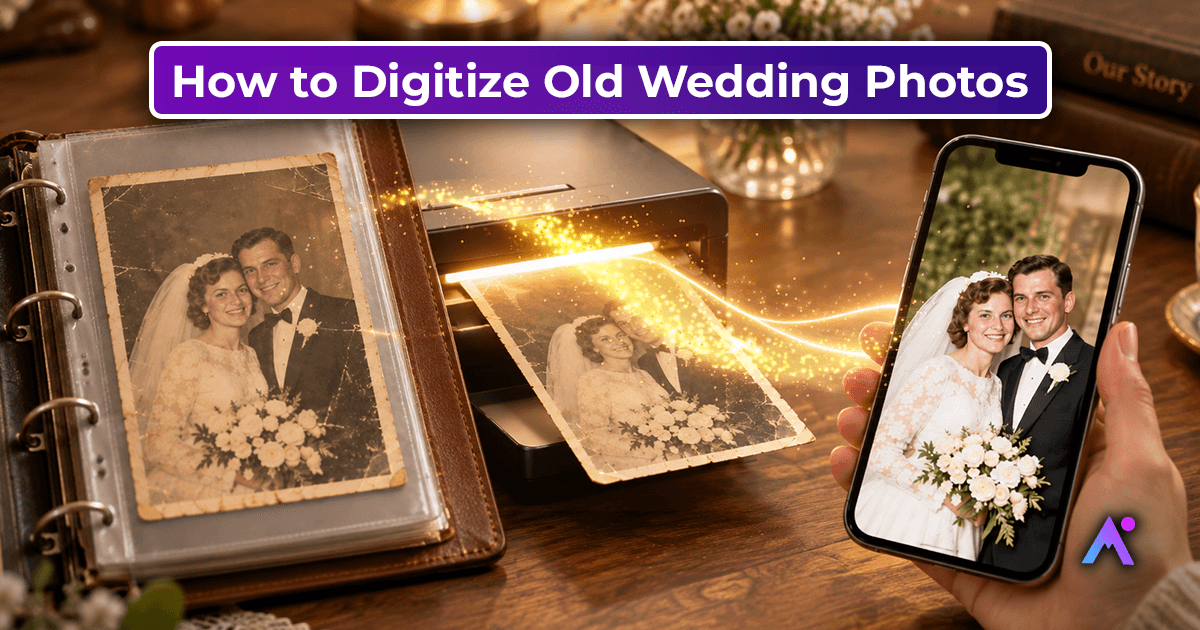
Most of the photographs that family members can use for reminiscence purposes are decades old. Some of them may therefore be fragile, damaged or even lost. There are many reasons why scanning old family photos is a great option. When the old family photos are digitized, they can be stored and distributed. Also, some digital photo restoration services can restore the damaged photographs.
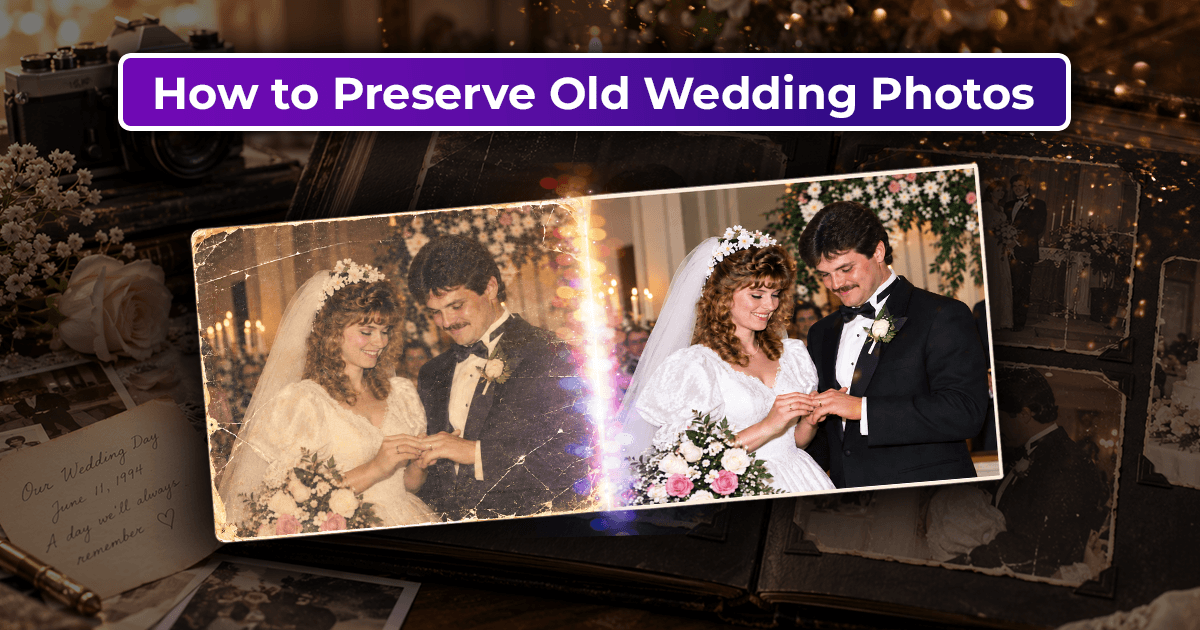
AI photo enhancement tools can help reduce visible damage such as scratches, noise, or color issues and may improve the apparent resolution of some images. Results vary, and enhanced images should be checked against the original. But it is also important to remember that the digital copy of the photo is not the same as the original and must be kept separate so that it is not lost.
Using Photos to Create Meaningful Family Moments
Reminiscence activities don't have to be elaborate or involved. A casual conversation and some photographs can create meaningful moments for a person with Alzheimer’s and a family member. Photographs can be mixed with music and with other objects and stories from the past. For example, a family member can play music that was popular when the photo was taken.
Instead of attempting to get precise answers, the emphasis should be on having fun and enjoying the precious time together. A calm and nonjudgmental approach can help make reminiscence activities more comfortable and enjoyable.
Conclusion
Reminiscence therapy for Alzheimer’s offers a great opportunity for a family to engage in a conversation with a loved one and bring out the most precious memories. The key advantage of employing family photographs is that they usually depict various people or events.
Bring cherished family moments to life with Animate Memories. Turn meaningful family photos into gentle, moving memories that can spark conversations, connection, and moments of joy.